Bromley Town Centre Park Trail – Stop 1/2 (The Fernery)

Previous | Next

Welcome to Bromley Palace Park and it’s historic features! This location is the second stop on the heritage and biodiversity trail around the historic parks in Bromley Town Centre.
The Fernery and Victorian Fern Collecting

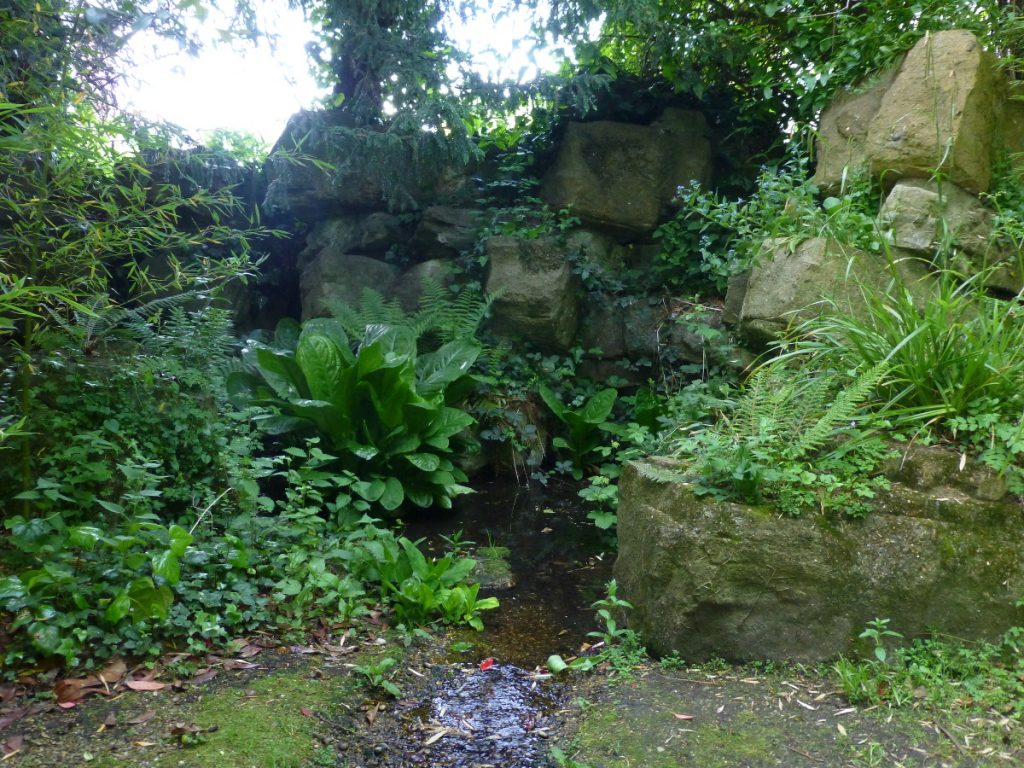
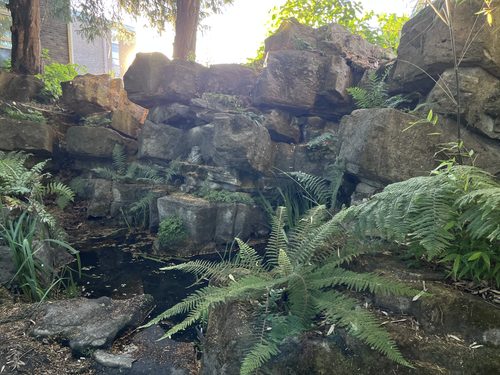
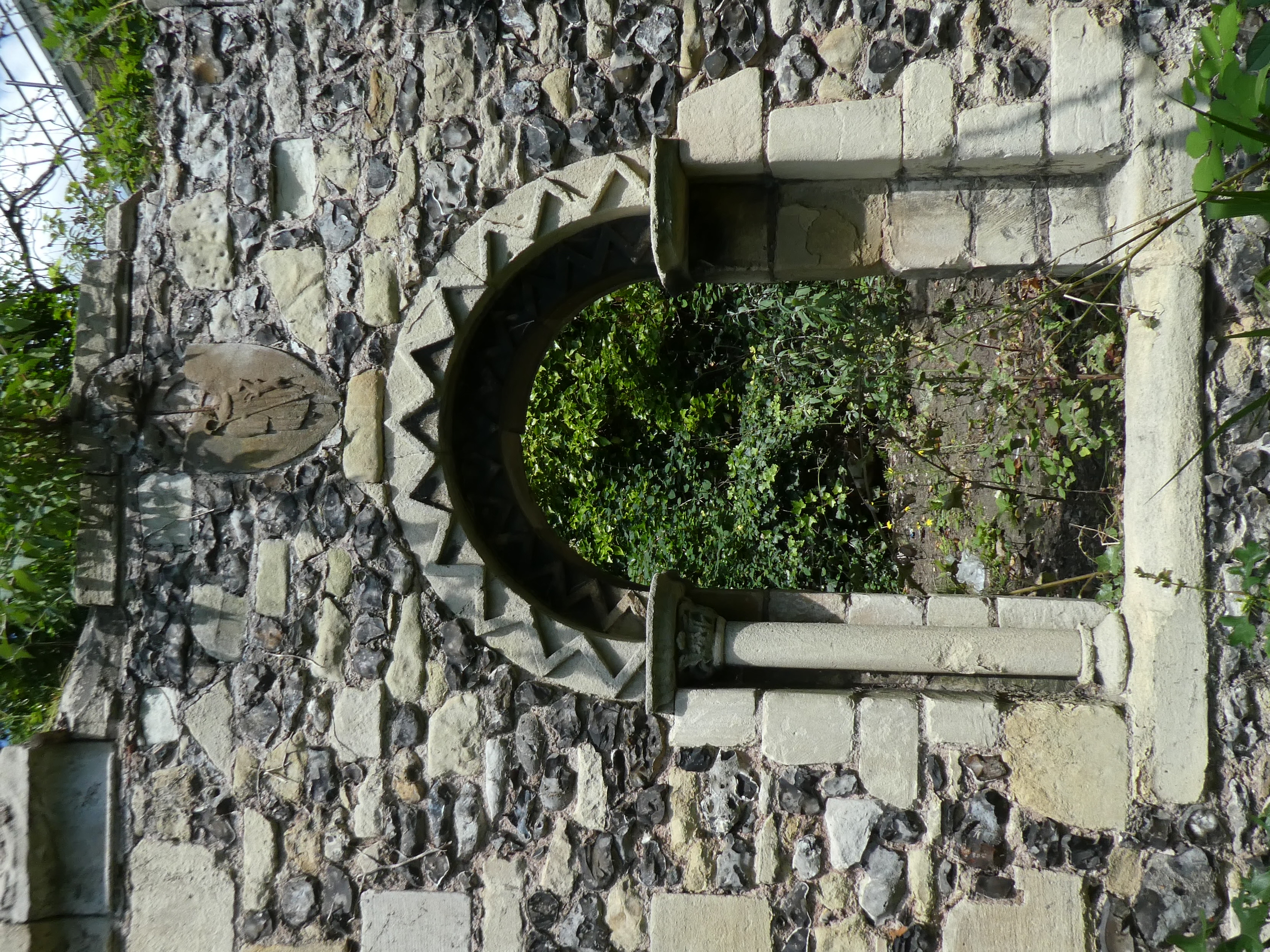
The Fernery is one of the four Grade 2 listed features in the park. When Coles-Child bought the title of ‘Lord Of The Manor’ of Bromley from the Diocese of Rochester, he set about creating a garden worthy of his new position.

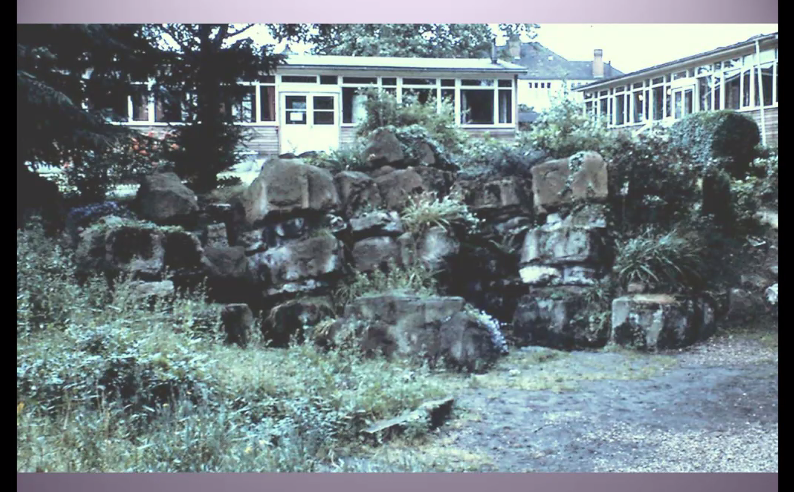
a rockery with school buildings behind
The fernery in the 1990s with Stockwell College buildings behind where there is a car park nowadays. This is before the bamboo and self-seeded yew trees overshadowed the rocks.

Fun Fact

Pteridomania!

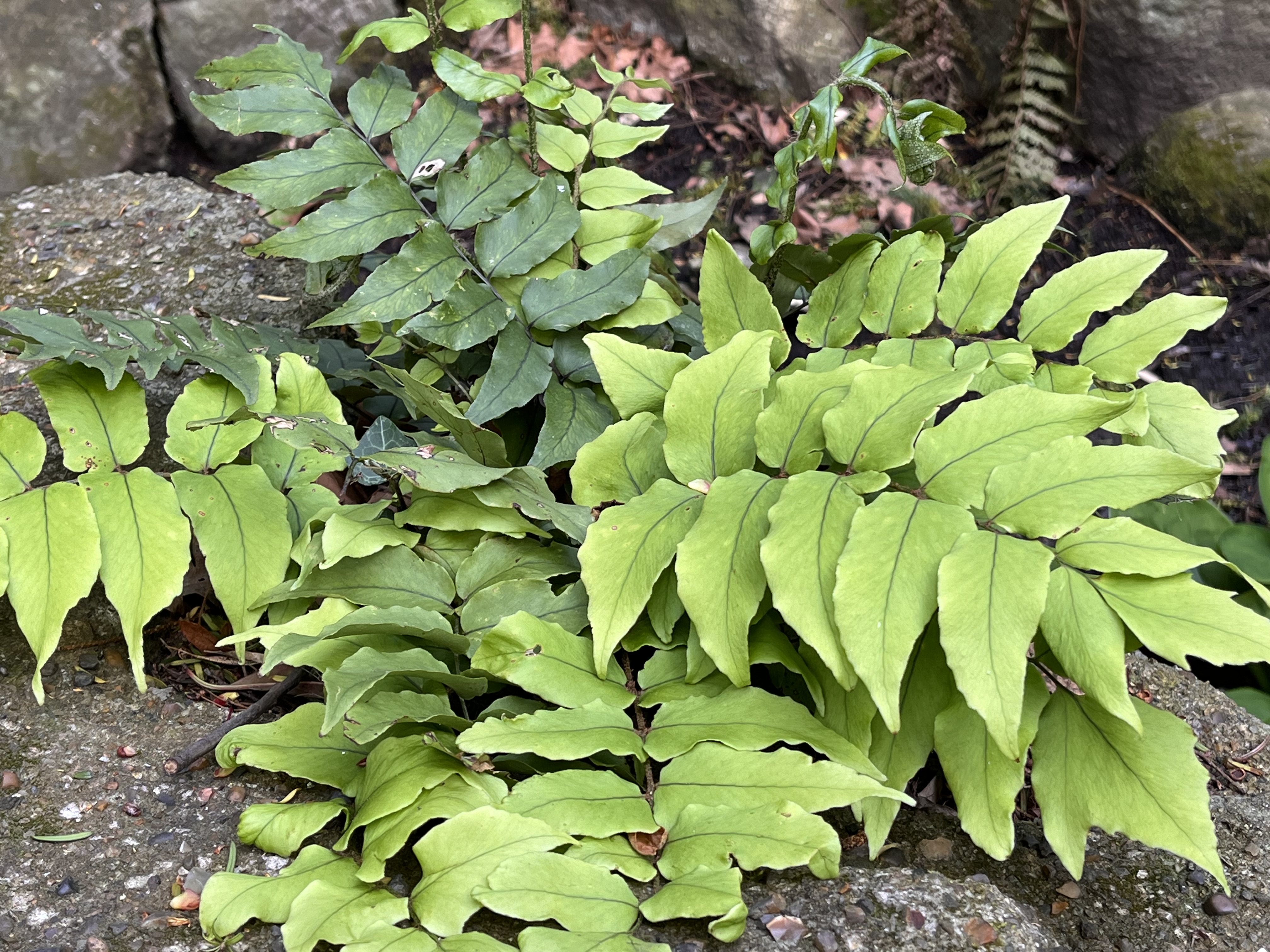
little fern

Do you think this is the study of flying dinosaurs… or the collection of ferns?
Sadly, it’s not as interesting as flying dinosaurs / pterosaurs, it’s the Victorian obsession of collecting ferns.
When this fernery was built, there was a fashion for collecting ferns – ‘pteridomania’ (the fern craze). This term was coined by Charles Kingsley, clergyman, naturalist (and later author of The Water Babies). Wealthy garden owners would collect ferns plants, native and from their travels,, and then wanted suitable structures to show their collection off – such as the Fernery and Cascade in this park.

An Order for ‘Waterfalls and ferneries’

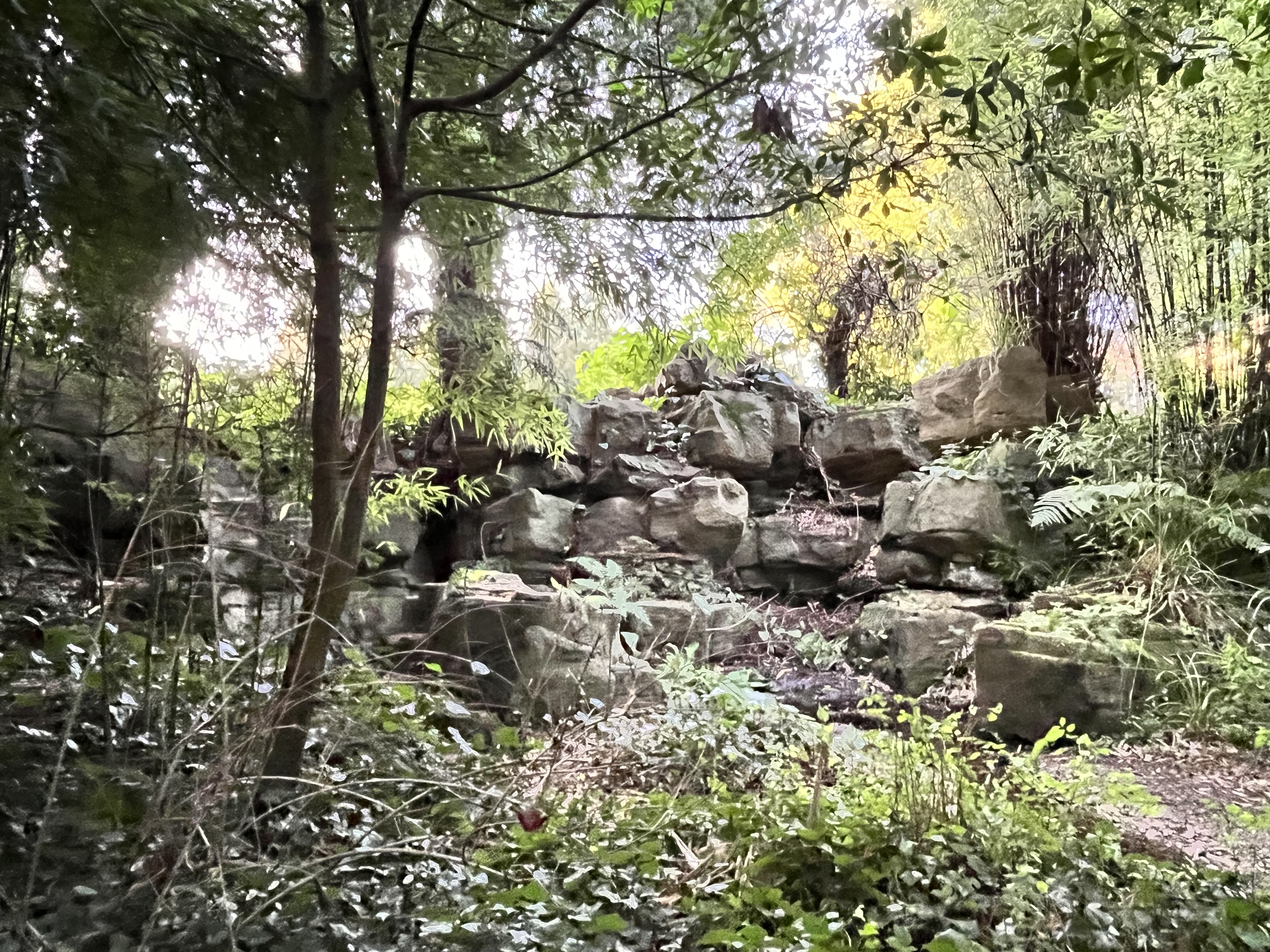
Coles-Child bought two fashionable ‘Pulhamite’ features, later described in their catalogue as ‘Waterfalls and ferneries’. This historic structure is their fernery, complete with little scoops in, for planting the ferns. The structure was built from bricks, and a skilled plasterer would apply the ‘Pulhamite’ over it, making it closely resemble real rocks. Pulhamite was an early form of concrete, made to their own recipe, by James Pulham & sons (which was lost on the death of the proprietors). They sent the craftsmen to Derbyshire to look at Millstone Grit outcrops so they could imitate the rocks realistically. Even Buckingham Palace had a couple of pulhamite installations!

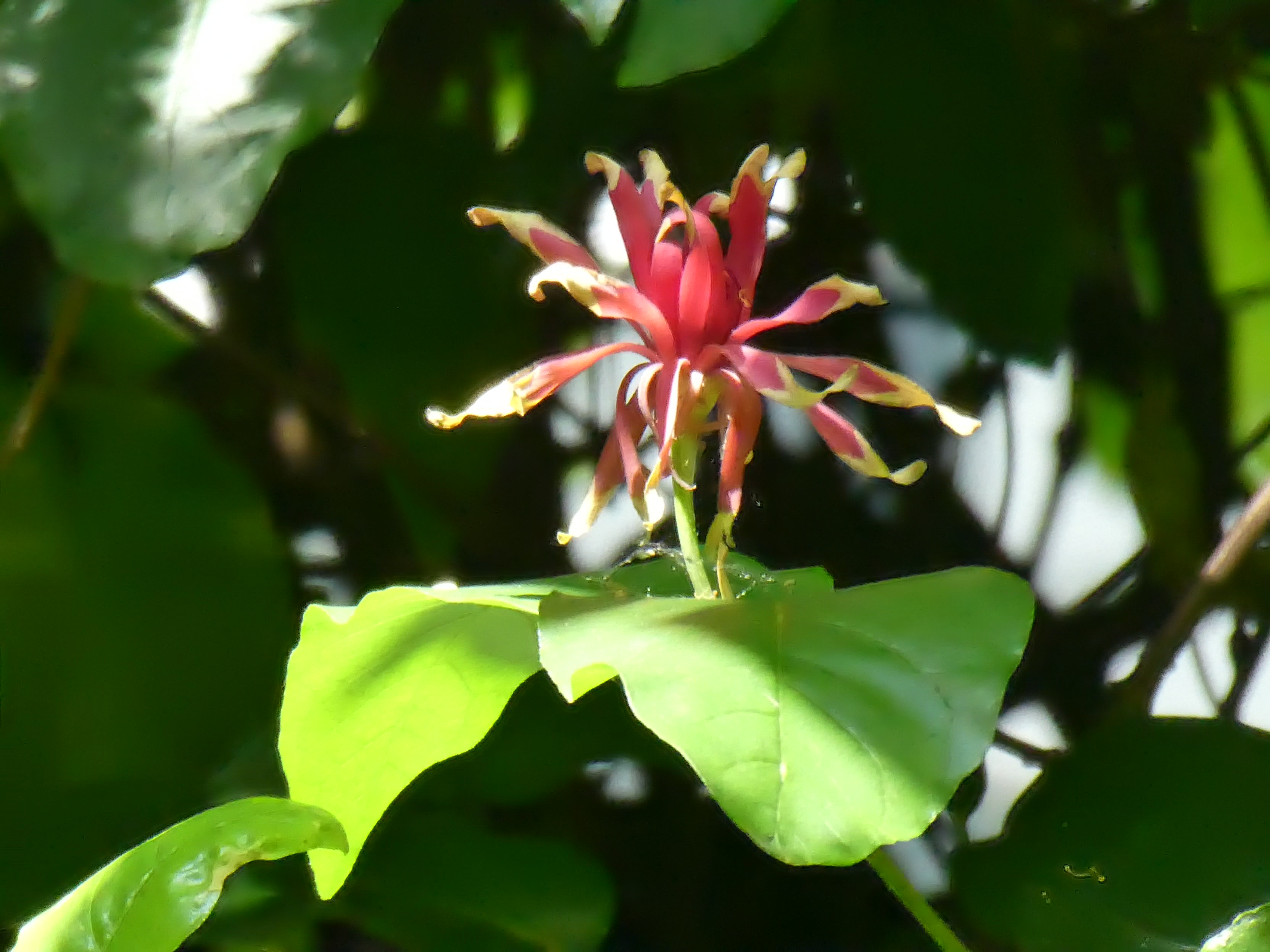
honey-suckle-like crimson flower
Carolina Sweet Bush, a rare flowering bush that has survived from the original historic planting.

English Heritage officially listed the features were Grade II listed in 2007. The reasons for listing were: It is a good and little-altered example of the artificial rockwork (Pulhamite) produced in the c19th by James Pulham and Son
It sits within a little-altered mid-c19th landscape setting, at the end of a lake and amidst trees.

Look behind the brick circle marking St Blaise’s well, where the path goes around the north of the lake.

Raising the crown of the Yew trees allowed more light into the Fernery in 2023.

The whole of the Bromley Town Park Heritage and Biodiversity trail can be found here.

This Fernery also has its own entry here in Bromley Civic Society’s page on this park, here.

To continue the Heritage Trail, retrace your footsteps back to the carriage drive and follow it around the Moat.

Posted in Item in the Parks Heritage Trail, Uncategorized | Tagged , | Comments Off on Bromley Town Centre Park Trail – Stop 1/2 (The Fernery)

Bromley Town Centre Park Trail – Stop 1/1 (St Blaises Well)

Previous | Next

St Blaise’s well & Chalybeate spring

Welcome to Bromley Palace Park and it’s historic features! This location is the first stop on the heritage and biodiversity trail around the historic parks in Bromley Town Centre.

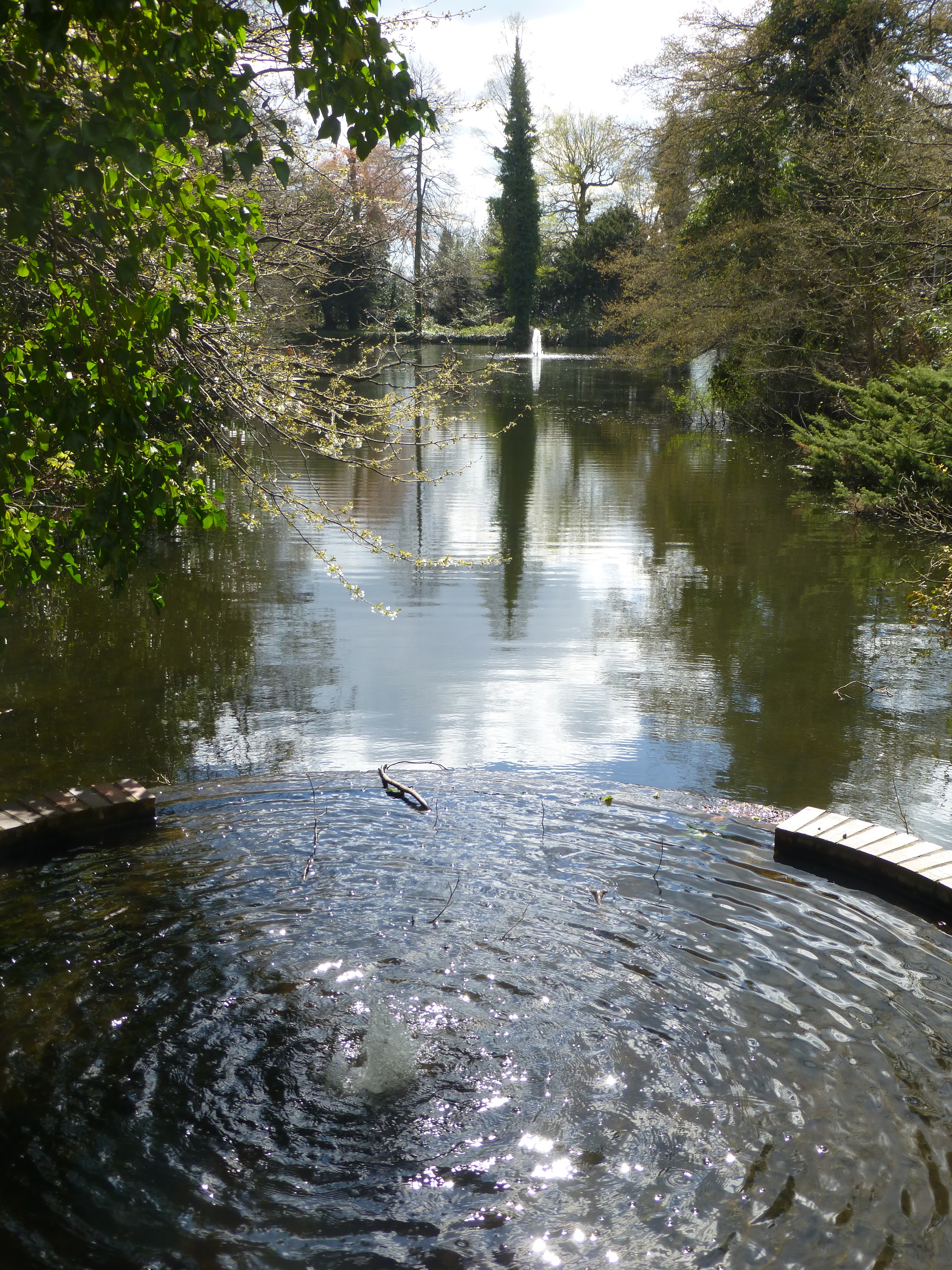
picture of circular low fountain with large lake behind, reflection of tall triangular tree in it
St Blaise’s well with the Moat and the Swamp Cyprus behind it, in 2017.

The well also has it’s own page (here) on Bromley Civic Society’s page on The Bromley Palace Park, here.

In the medieval era, there had been an Oratory at St Blaise’s well in Bromley, and this spring was rediscovered in 1754.  Wool was an important product for the area around Bromley, and through Kent, in the medieval ear, so St Blaise was a popular saint. In those days, they also liked a gruesome martyrdom. The well was supposed to have curative properties, and would help you get better from anything from fever to tummy ache. It even became a pilgrimage destination. However, in the reformation, Bishops of Rochester who lived here, such as Bishop Nicolas Ridley, did not indulge such superstitions, and the location of the well was lost and forgotten.

Fun Fact

Go to St Blaises, so you do less penance!

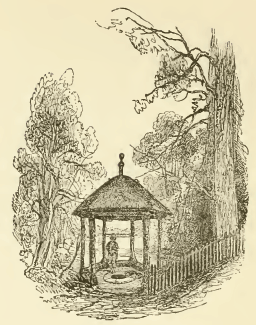
drawing of hexagonal roof on pillars over well

In the medieval era there had been an oratory (a chapel) at St Blaise’s Well in Bromley.  People who had confessed sins (or been found out about them) could reduce the ‘penance’ (punishment) by saying their prayers at this oratory.

An example was Thomas Ferby, who was excommunicated in 1456, after a ‘clandestine’ (secret) marriage in St. Paul’s Cray Church. He had to present a wax taper of a pound weight at St Blaise’s oratory.

After the discovery, the Bishop Wilcox roofed the well with a thatch roof supported by 6 pillars, which looked fashionably rustic. In 1887 this roof was destroyed in a snow storm, and replaced by a tile one by Mr Coles Child. The stone basin did survive, until it was removed by one of the council officers and the circular brick feature put in, instead.

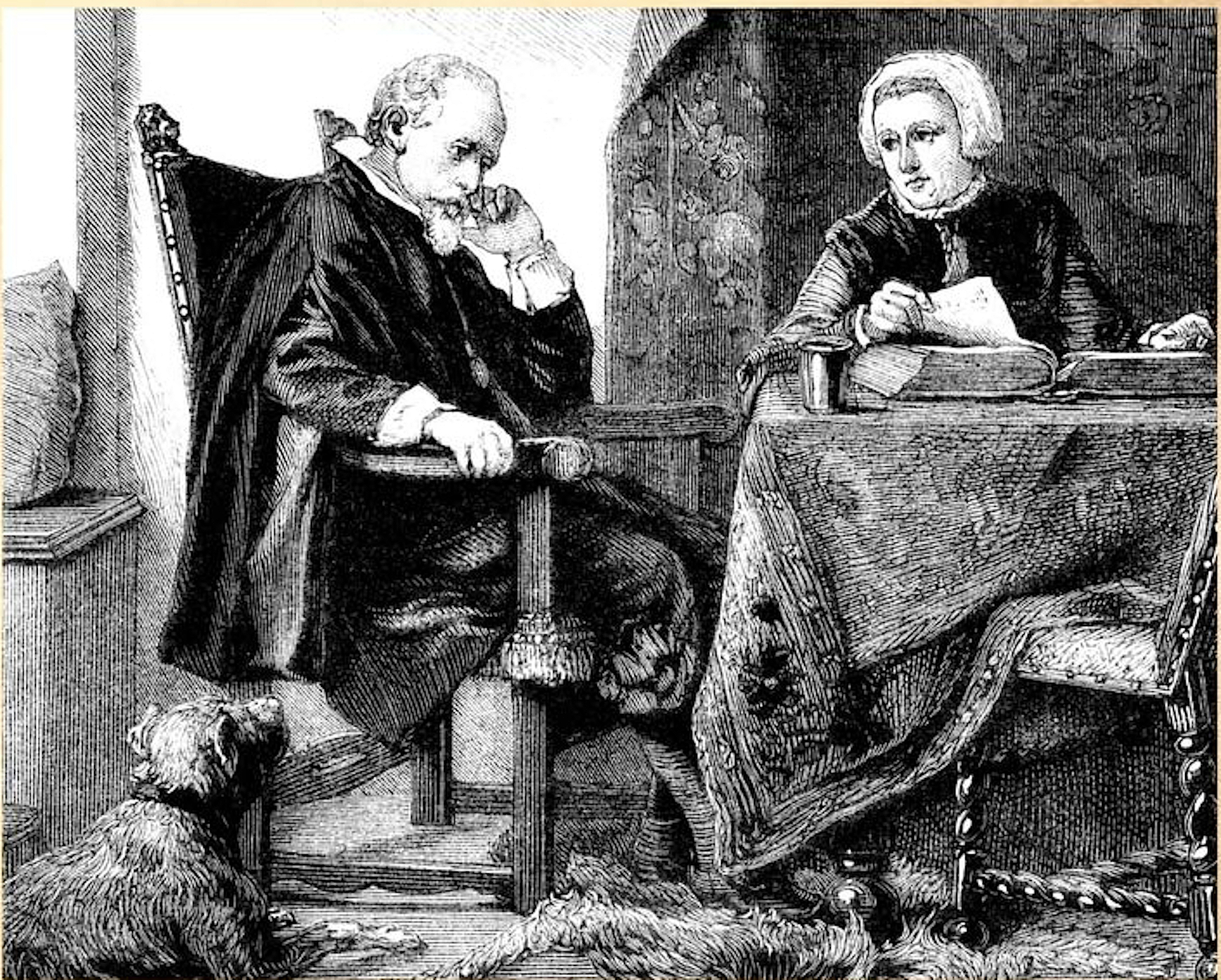
an pensive looking husband and wife at table
1756 retired surgeon Thomas Reynolds

A retired local doctor analysed the spring waters upon it’s rediscovery in the Georgian era. Thomas Reynolds had been journeying down to Tunbridge Wells to take the Chalybeate water there, and was delighted to find a more convenient source, he said that he “has been many years been obliged to drink the waters of Tunbridge, to mitigate the symptoms a confirmed inveterate irregular gout, which were very various and very severe.” He published his analysis of the waters about 2 years later.

The famous 17th-century English physician, Thomas Sydenham, penned the verse:

These waters youth in age renew

Strength to weak and sickly add

Give the pale cheek a rosy hue

And cheerful spirits to the sad.

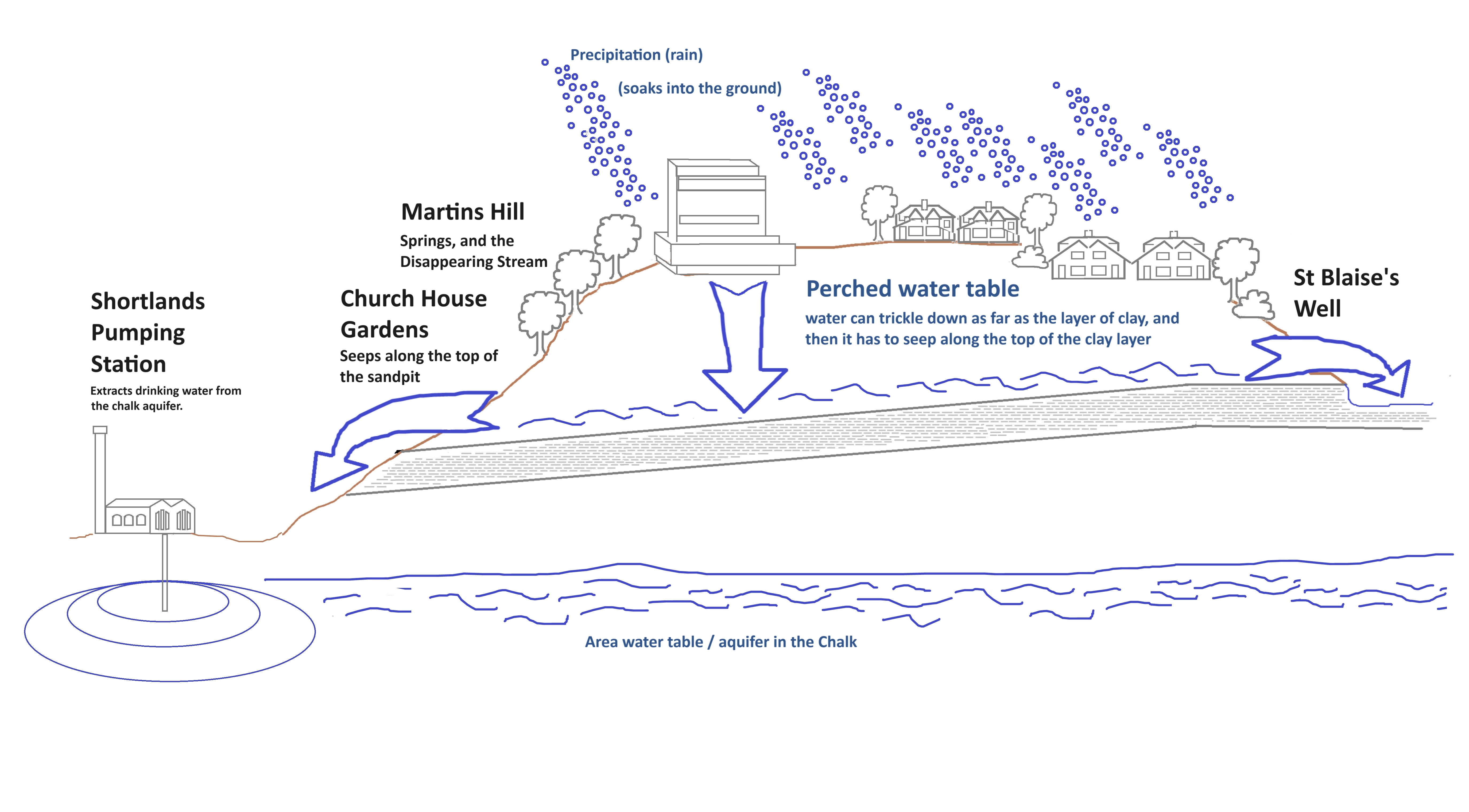
diagram of a hill with a perched water table in it
Diagram of the perched water table under Bromley town centre, coming out as spring lines above Shortlands and at St Blaise’s Well. After Paul Rainey, 2012.

All the stops in the Bromley Town Centre Parks Heritage & Biodiversity trail can be found on the page about it here.

To continue the Heritage Trail, follow the little path (on the right hand side of the Carriage Drive) and on your right there is a rocky cliff – this is the fernery.

Posted in Item in the Parks Heritage Trail | Tagged , | Comments Off on Bromley Town Centre Park Trail – Stop 1/1 (St Blaises Well)

Threat to our Art Deco cinema – public meeting on 11th July

The public meeting was well-supported and very constructive, but the committee it elected folded a few weeks later. There is still a group on Facebook to continue in attempts to save the building, but only the facade is in the Conservation Area. The rest of the building falls in one of the council ‘Opportunity Sites‘ along with the Hill car park and the Telephone Exchange building – when this site comes forward and is marketed to developers (for high-rise housing), it will be difficult to prevent demolition.

Continue reading
Posted in BCS news | Tagged | Comments Off on Threat to our Art Deco cinema – public meeting on 11th July

Churchill Theatre – what is the future? How is it affected by the terms of the land’s Endowment?

Our theatre building, it has been announced, is at end of life, and the repairs needed will cost more than the council is prepared to pay.  Therefore, council has put the freehold of the building on the market for sale.

Continue reading
Posted in BCS news | Tagged , | Comments Off on Churchill Theatre – what is the future? How is it affected by the terms of the land’s Endowment?

How we celebrated Broomtime 2024

Bromley is named after the little yellow broom flower – it grew in profusion in the fields – and the town held a festival every year. This year, we resumed the custom of celebrating it again. We had our exhibition panels set up in the upstairs of the Glades, with new panels about Broom flowers and Bromley

Continue reading
Posted in BCS news, Events | Tagged , , | Comments Off on How we celebrated Broomtime 2024

Saved Demolition! Thanks for your help!

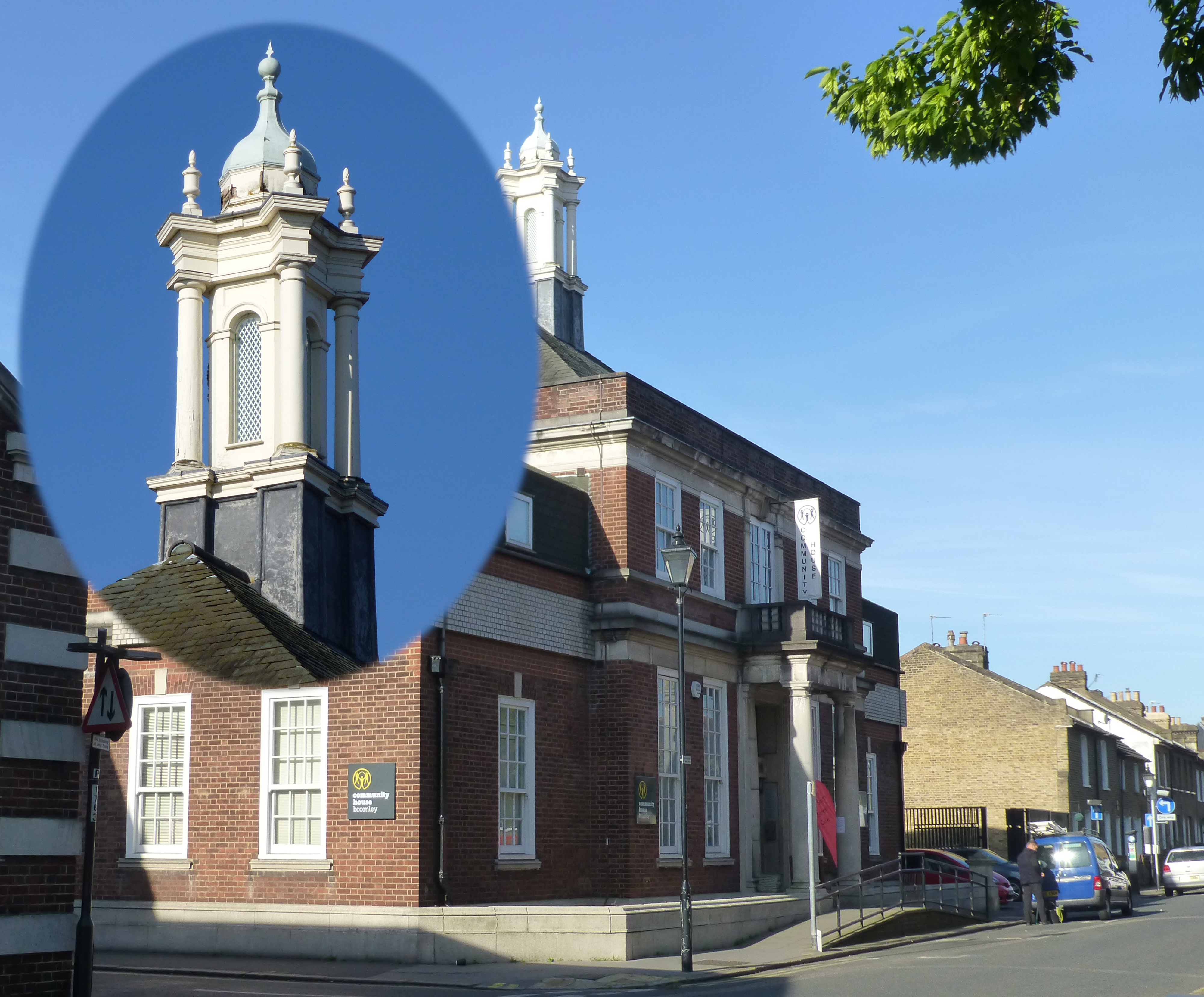
It was discovered, 9pm on Thursday 2nd May, that the new owners of Community House, planned to demolish the lovely cupola that Saturday (4th May). We did as much as we could to spread the word, so people could email our council leader and other relevant parties to prevent this.

On Friday afternoon, the borough Conservation Officer, Simon Went, had “Preservation Notices” posted on the building and hoardings, and the Cupola was saved! These notices give six months to get the building listed, and full protection in that time.

We are very grateful to everybody who spent the time to email on this issue, and very glad it succeeded.

The new freehold owners – recently sold the property by our council, to save the council tax payers the cost of repairing the property – would also like to avoid the repair costs.

The cupola is an essential and iconic part of this historic building, built in 1939 by the architect C Cowles Voysey. The old Magistrates Court is one of an identifiable group of public buildings on Widmore Road and South Street.

The cupola on the former Magistrate’s court in 2019.

Posted in BCS news, Campaigns | Tagged , , , | Comments Off on Saved Demolition! Thanks for your help!

Our Chair receives the Mayor’s Award for 2024

We are very proud that our Chair, Tony Banfield, was one of ten recipients of the Mayor’s award (for contributions in the voluntary sector).  Tony has been pivotal in saving our historical buildings and green space in the town centre, in founding the Heart of Bromley Residents Association (HOBRA) in the 1980s, then the Bromley Civic Society in 2007 as part of the national Civic Voice movement.

Continue reading
Posted in BCS news, Blog | Comments Off on Our Chair receives the Mayor’s Award for 2024

Last fragment of the Medieval Moat

very weedy small lake with a chest-high fountain
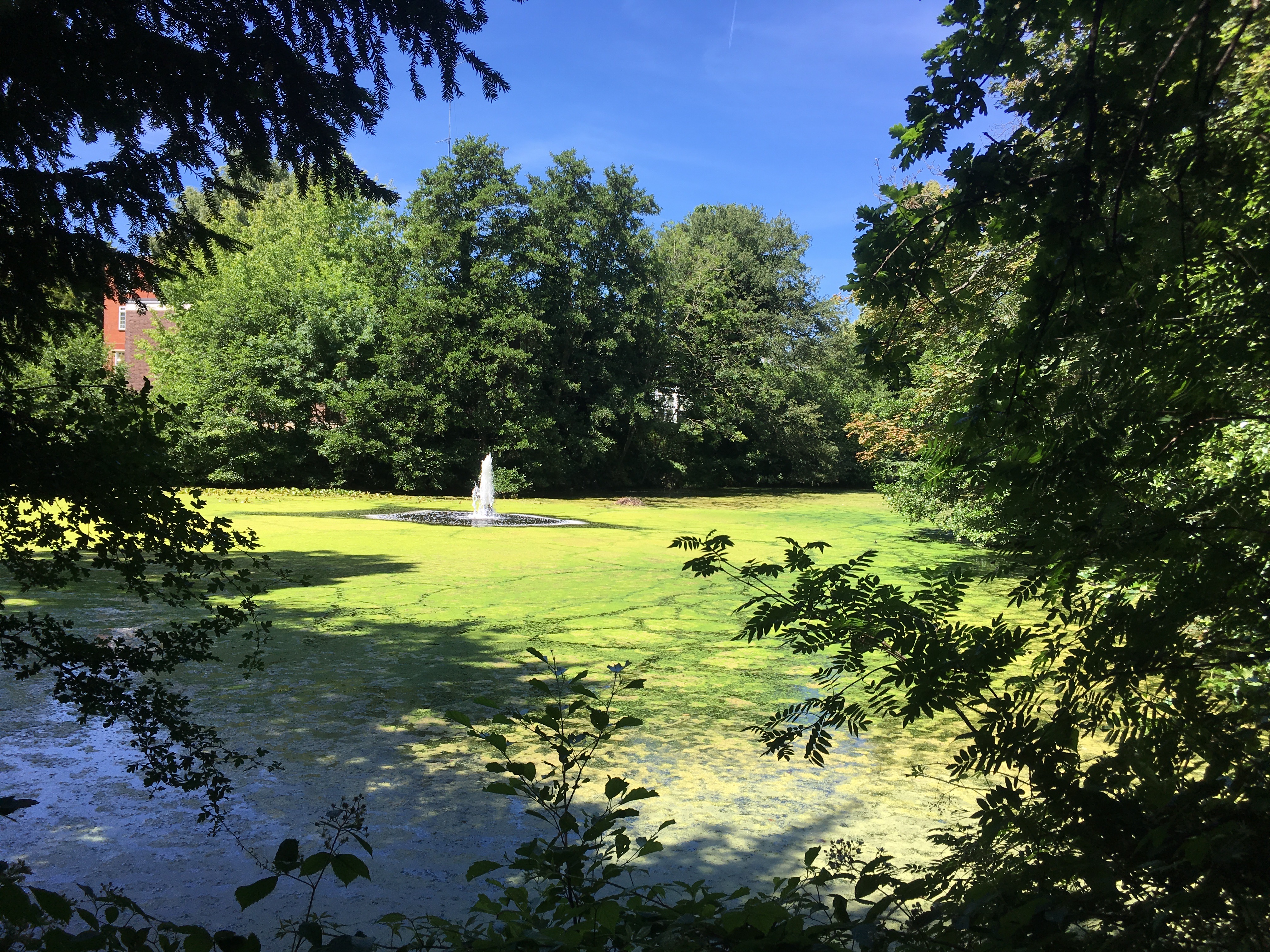
The moat with its algae/blanket-weed bloom in July 2023. Fountain at about 2/3 proper height.

This feature is stop 3 on the Bromley Town Centre Park Trail, here.

The original moat of the Bishops Palace – the homes of important people, such as Bishops, needed moats in the lawless years of the 1100s ‘Anarchy’ – survives in this fragment. Unfortunately, 30 years of neglect and recent tree-falls are in danger of finally letting this last part silt up.

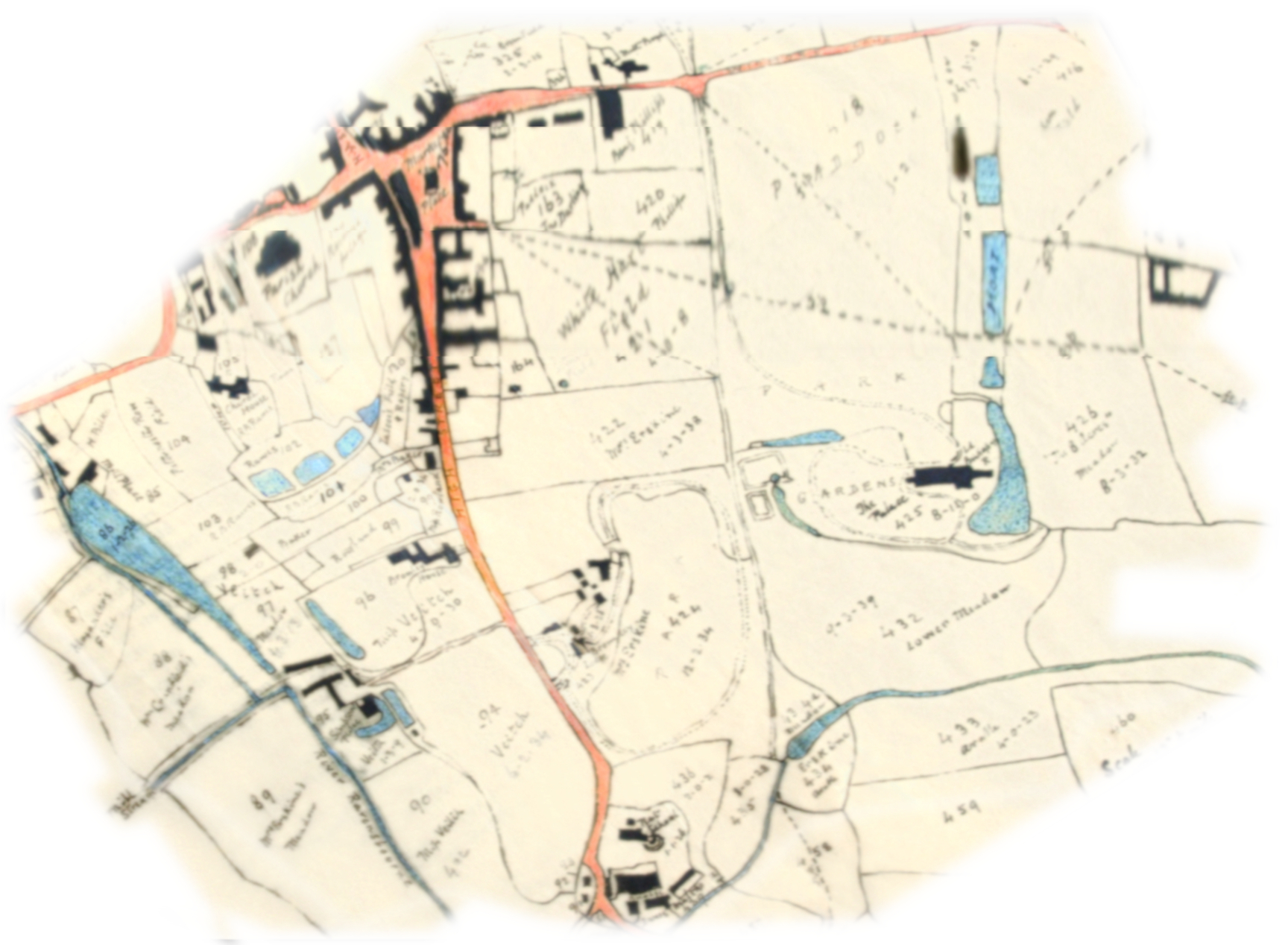
Old map showing remnants of ponds around the Old Palace and 3 more along the stream.
1826 Tithe map showing the fishponds, still called the Moat, around the Old Palace. The draining stream to the south later became the Ha-ha.

Moats became fishponds in the medieval era, as fish were an important part of the diet. As such they would need draining and the silt removing every few years, (for water quality). This activity in 1754 lead to the discovery of St Blaise’s well.

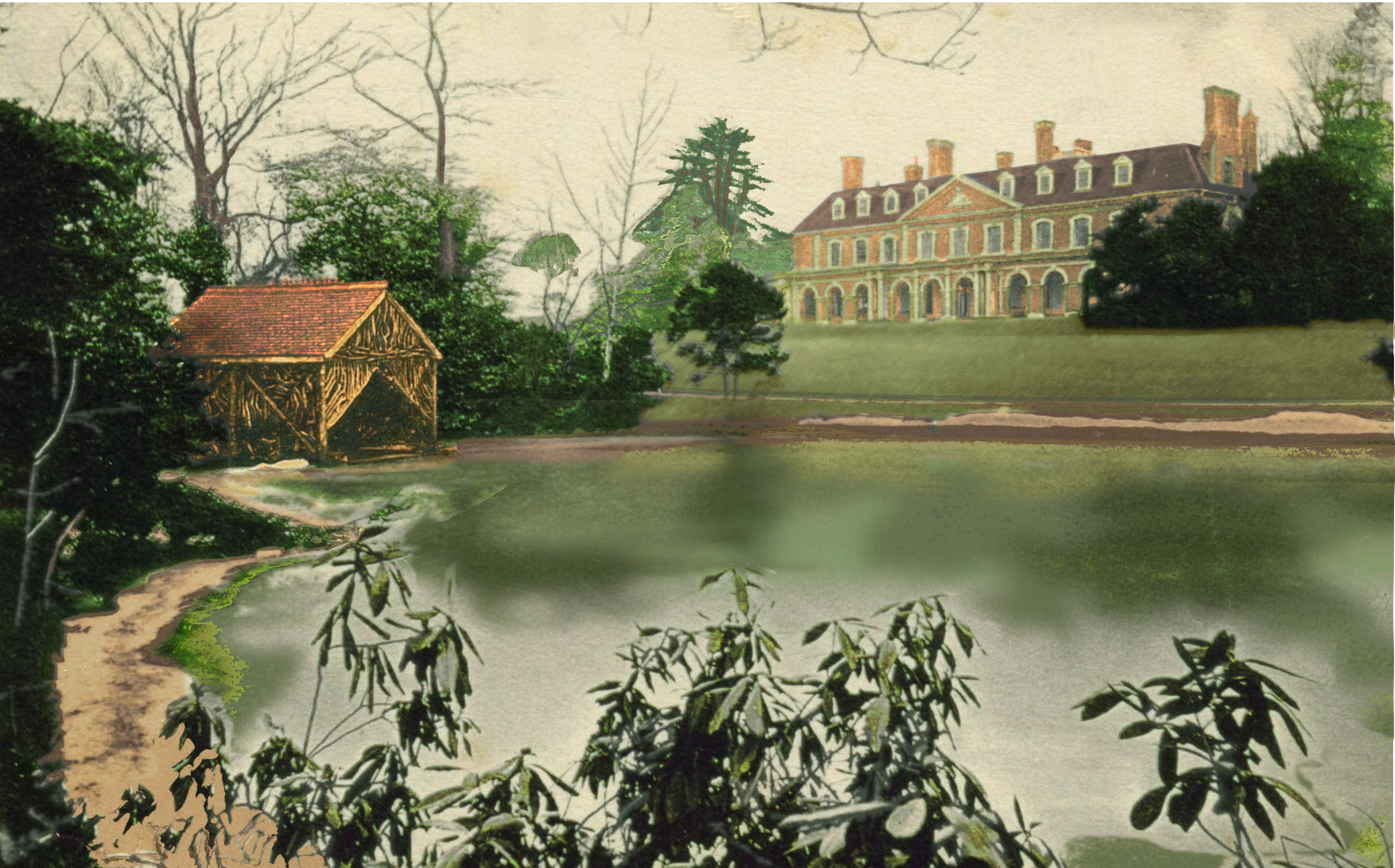
colourised old photo showing stately home, rustic boathouse, and a lake in front.
Colourised version of a postcard from 1908. The Rustic Boathouse is now ruined behind a fallen tree.

The Moat, with genuine medieval masonry discovered at the bottom (see the Lord of the Manor’s Folly) was just the accessory to show off the house and gardens. When Charles Coles-Child Esq commissioned James Pulham & Sons to create a garden suitable for his new status in life, natural looking lakes had been in vogue for over 100 years.

The Medieval calendar was made up of days when various saints were remembered. Many of these days involved repentence and fasting, rather than being a feast day. Also, faith-abiding households would not eat meat on Wednesdays and Fridays. In total it is thought that this would be about 150 days a year when meat could not be consumed. Instead, if any meat was eaten on these days, it would be fish (or animals/birds that could be classed as fish, on occasions this was quite creative).

To return to the page for the Bromley Palace Park, click here.

Posted in Green Space - Palace Park | Tagged , | Comments Off on Last fragment of the Medieval Moat

12 Good Reasons: Objections to John Lewis/Waitrose Development

There is a more recent post, here, as the proposals have finally come to committee, with the planners advising approval.

Cliff face of pink buildings tower over road
The Cliff Face proposed to face people driving down Masons Hill.
24 storey white building towers over 2 storey low-rise station
How the new buildings will tower over the Rail and Police Stations.
developers drawing of 24, 19, 12, and 10 storey blocks in addition to existing 3 storey building.

The Proposals

The development provides 353 ‘build to rent’ flats in four towers: 24, 19, 12 and 10 storeys. The existing food store is retained, and some commercial space is provided.  The development is car free – ie no parking spaces for residents (there might be some disabled spaces).  There is parking for the Waitrose store however – reduced from the present levels.  There is some new open space provided past the bridge – also a hard landscaped ‘piazza’ at the entrance to the store. The Build to Rent flats are to be controlled and managed by John Lewis Partnership, with a minimum of 10% affordable housing (by habitable room) in the form of Discount Market Rent at London Living Rent levels. 

WHAT WE ARE OBJECTING TO:

Note for people thinking of commenting: Objections that simply say ‘…the buildings are too high’ or that express a dislike of tower blocks will carry little weight by themselves. However, look at the paragraphs below for phrases you could effectively make, remembering that your own words will be better than copying ours.

The planning application is at 23/02633/FULL1. Please copy your own ward councillors in on your comments – you want them to feel accountable on this issue – which you can find here. And please copy in the Town centre’s ward councillors (LibDem) at btcouncillors@bromleylibdems.org.uk:

We have collated 12 points which you might want to comment on, against this development:

Continue reading
Posted in Blog | Tagged , | Comments Off on 12 Good Reasons: Objections to John Lewis/Waitrose Development

Bromley Town Centre Park Trail – Stop 5/1 (The Mill Pond)

Previous | Next

Welcome to the historic Glassmill Pond. This location is one of the stops in our heritage and biodiversity trail around the green spaces in Bromley Town Centre.

Glassmill Pond

There were a number of mills recorded in the Doomsday Book along the River Ravensbourne in Bromley, but the only one that survived until the modern era is this one.

It is often called ‘Glass Mill Pond’ as there was a glass mill on the higher bank. In Georgian times it ground pre-made glass, some of which was shipped over from China, into the convex lenses that were fashionable in large houses. They scattered the light, and frequently had little paintings on the rear and fancy lattice frames.

The mill also ground glass for scientific instruments.

Currently, Thames 21 are carrying out restoration work on the river, which will include recreating the pond, separated from the river by a bank, over which the river can wash when the water levels are high. As this section has not been dredged for 30 years, there has been a lot of silt to remove.

long fenced pond reflecting trees in bloom
The mill pond on a sunny day in March

There is more information on Glassmill Pond at the entry on this park in the Bromley Civic Society site, here.

All the stops in the Bromley Town Centre Parks Heritage & Biodiversity trail can be found on the page about it here.

To continue the Heritage Trail, you can choose a long or short route. The long route involves going straight along the pond, crossing the road and climbing the hill to the war memorial, then going out of the gates, and in the park gates diagonally opposite, where there is a carriage drive to a pergola. For the shorter route, retrace your steps to the last stop, and climb up the terraces to the balustrade.

Posted in Item in the Parks Heritage Trail | Tagged , | Comments Off on Bromley Town Centre Park Trail – Stop 5/1 (The Mill Pond)